
Culture
Leadership
Beyond Cupcakes: What Real Inclusion Looks Like in Technology and Consulting
Real inclusion isn’t built through symbolic gestures, it’s built through everyday actions, decisions and leadership. In this article, Stacey Kavanagh explores what meaningful inclusion really looks like in technology and consulting, and why moving beyond surface-level initiatives is essential to creating workplaces where people genuinely belong and thrive.
Published on LinkedIn
•
5 Jul 2026
Read on LinkedIn
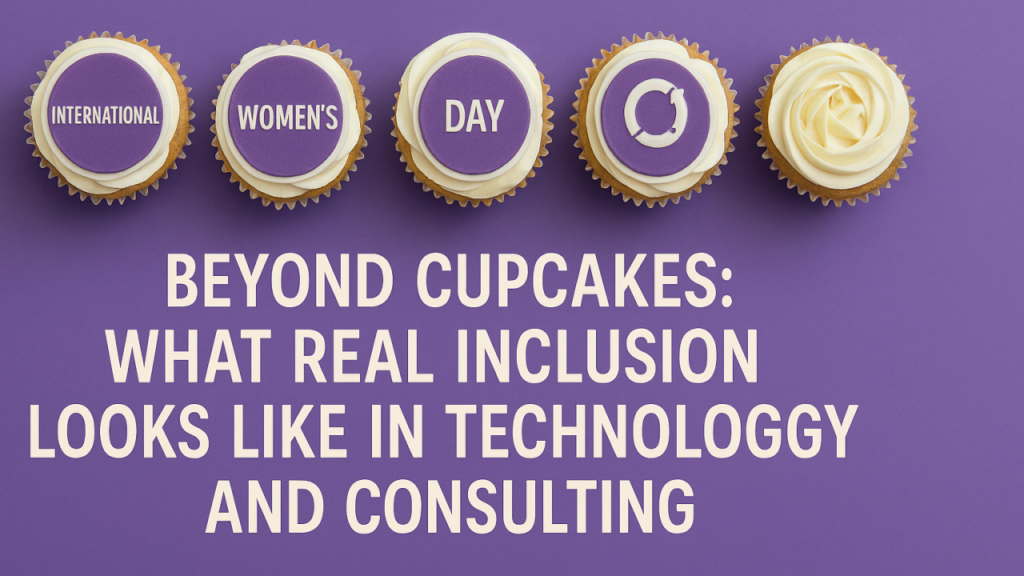
Every year, as International Women’s Day approaches, something strange happens in the consulting world. Calendars fill with morning teas, purple decorations suddenly appear and the obligatory cupcakes arrive. These gestures are well intentioned, and create moments of celebration and connection. But what happens once the cupcakes have been eaten and the decorations packed away? If we are honest, has International Women’s Day become more of a day of symbolic celebrations, rather than driving change?
In an industry built on solving complex problems with smart and practical solutions, we can do better than cupcakes. This International Women’s Day, I’m challenging the norms, and the rut, our industry has become stuck in, and thinking about what we can do to drive female inclusion in our industry. What meaningful actions can we take to ensure the next generation of women in the technology and consulting don’t quietly exit the industry due to the invisible barriers we have not yet dismantled?
Here are three ways we can move beyond gestures and into genuine inclusion:
1. Replace Mentorship With Sponsorship
Mentorship is important, but it generally happens behind closed doors. Sponsorship is public, intentional and career shaping. A sponsor doesn’t just give advice, they give access. They speak someone’s name when they are not in the room. They put someone’s name forward for high profile work. They use their political capital to open doors that might have otherwise stayed firmly shut.
Women in technology and consulting do not suffer from a lack of capability, they suffer from a lack of visibility. Sponsorship changes that.
What you can do as a leader:
Identify two talented women to actively sponsor for the next year.
Celebrate their achievements publicly.
Encourage your peers to embrace sponsorship as well.
2. Fix the Middle – Where Attrition Really Happens
Our industry has no shortage of female graduate level talent – eager and talented women keen to learn and make a difference. The real challenge comes mid-career, when the workload intensifies, responsibilities increase and personal and professional pressures collide. For many women, work becomes another burden rather than a passion, and attrition follows. Instead of focussing on early career hiring, we need to focus on retaining and advancing women who are already here.
What we can do as organisations:
Create development programs specifically designed for mid-career women, with clear leadership pathways rather than more generic trainings.
Invest in return-to-work programs that are genuinely supportive, and pair returning women with complex and meaningful projects, not sideline work.
3. Redesign How we Recognise and Reward High-Potential Talent
Traditional definitions of ‘leadership potential’ are often skewed towards traits commonly coded as masculine – assertiveness, loudness and confidence. In consulting, where confidence can be mistaken for competence, we risk overlooking exceptional contributors simply because they don’t deliver ideas with theatrics. Modern leadership requires more. The ability to draw out the quiet voices, to create psychological safety, to bring diverse thinking together, and to lead with empathy and clarity.
What we can do as leaders:
Facilitate meetings where contributions are intentionally included, not competitively dominated.
Challenge our reward and recognition programs to ensure we are celebrating true impact, not just volume.
Celebrate wins across the whole team, and use your platform to amplify those who speak the quietest.
Beyond the Symbolism
I am not opposed to cupcakes (in fact, I really enjoy them!). Celebration is meaningful, and visibility matters. But celebration is not a substitute for action.
Real inclusion comes from the moments that never make it onto social media. Inclusion is seen in calibration meetings, in how responsibilities are allocated, in the policies that support real families, and in the everyday behaviours that determine who feels valued.
If we want women to not only enter the technology and consulting industries, but to remain and thrive and lead, we need to move beyond the symbolic and intro the meaningful. Because once the cupcakes are gone, what remains is culture. And culture is shaped by the choices we make every single day.
Tagged Culture, Leadership