Most projects don’t come undone because of one big issue… it’s the things no one thought to question early enough.
In this Article, Jacinta Goldstone-Henry reflects on project delivery specifically those blind spots, where they show up, and why finding them early makes all the difference.
There has been a subtle but unmistakable shift in how organisations are engaging with consultants and advisors. As leaders grapple with constant change and limited bandwidth, their expectations of advisory support are evolving.
In this article, Stacey Kavanagh explores what that means for clients and consulting firms alike.
Most organisations don’t get governance wrong by doing too little. They get it wrong by doing too much, or applying it in the wrong places.
In this article, Martin Adams breaks down why one-size-fits-all governance fails, and how to apply just enough control to manage risk without slowing the business down.
Payroll often bears the burden of reconciling problems created upstream. In healthcare environments reliant on agency labour, a single shift can generate multiple, conflicting records of what occurred. This article explores why that
happens, how it impacts payroll teams, and what
finally restores control.
In this article, Jacinta Goldstone-Henry explores why that
happens, how it impacts payroll teams, and what finally restores control.
For years, efficiency has been the dominant measure of organisational performance. Leaner, faster, lower cost.
In this article, Stacey Kavanagh outlines why that model is no longer sufficient, and how resilience is emerging as the defining capability for organisations operating in an increasingly volatile environment.
Most testing phases end the same way. Progress is strong, confidence is high, and the focus shifts to closing things down and moving forward.
In this article, Jacinta Goldstone-Henry outlines why that’s exactly when risk is highest, and how skipping negative testing leaves organisations exposed to issues that only surface once the system is live.
Each year, the release of Workplace Gender Equality Agency data and International Women’s Day prompts a familiar cycle of commentary. Statements are made, commitments reaffirmed and attention spikes.
In this article, Stacey Kavanagh outlines how public reporting has fundamentally shifted gender equality from an internal metric to a market signal, and why organisations need to treat it as an indicator of leadership effectiveness, not just intent.
Agentic AI might be new. The way organisations are approaching it isn’t.
In this article, Martin Adams breaks down why the same issues that derailed RPA are showing up again, and how to avoid repeating them.
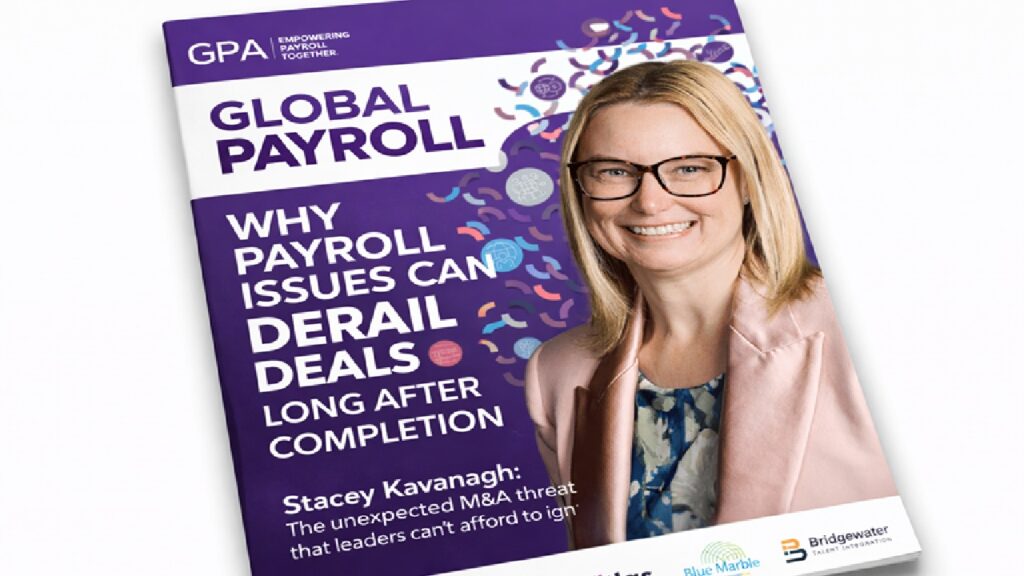
Payroll is rarely treated as deal-critical during mergers and acquisitions, but the consequences of getting it wrong can surface long after the deal closes.
In this article, Stacey Kavanagh explores why payroll risks are often underestimated in M&A and how overlooked compliance issues can quickly turn into costly problems for organisations in Australia.
Real inclusion isn’t built through symbolic gestures, it’s built through everyday actions, decisions and leadership.
In this article, Stacey Kavanagh explores what meaningful inclusion really looks like in technology and consulting, and why moving beyond surface-level initiatives is essential to creating workplaces where people genuinely belong and thrive.
When technology stops working for your organisation, the worst thing you can do is tolerate it.
In this article, Jacinta Goldstone-Henry explores why technology projects often under-deliver and the practical steps leaders can take to regain control and get real value from their systems.
What will separate winners from the rest in 2026 isn’t the technology they buy, but how deliberately they use it.
In this article, Stacey Kavanagh outlines the practical moves leading organisations are making right now across AI, cyber resilience, simplification and workforce capability to turn technology into real, measurable business value.
Why do so many well-funded technology programmes fall short of expectations?
In this article, Jacinta Goldstone-Henry cuts through the hype to show why real transformation depends on people, process and governance, drawing on practical lessons from government, healthcare, childcare, mining and enterprise organisations where adoption and value were the real measures of success.
If your organisation hasn’t approved AI tools, it’s almost certainly using AI anyway.
In this article, Martin Adams explores the rise of “shadow AI”, why banning it doesn’t work, and the practical first steps leaders should take to make AI use safe, compliant and fit for real work.
AI policies alone don’t change behaviour, confidence does.
In this article, Martin Adams explores why most AI policies fail in practice, the fears and uncertainty many employees have about AI, and the practical steps leaders can take to build confidence so safe AI use becomes part of everyday work.
If you don’t enable your team to use AI, some of them will leave to use it somewhere else.
In this article, Martin Adams explores why restricting AI can quietly drive talent away, and the practical steps leaders can take to enable safe adoption while helping their people build the skills they’ll need for the future.